Find funding
There are many other organisations who may be offering funding that will help you, and our handy funding search tool brings them all together.

In May of this year Scottish Government Rural policy officials and a range of stakeholders met in Oban for a joint planning session focused on strengthening collaboration and shaping future priorities for rural communities.
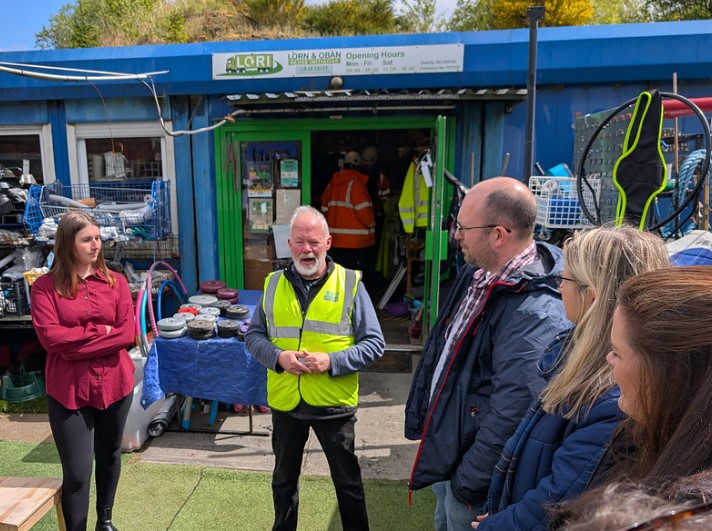
Author: Roderick Low
Published on: 14 August 2026
As part of the Scottish Rural Network (SRN) delivery team, I am heavily invested in strengthening rural and island communities across Scotland.
I was therefore delighted to be asked to support colleagues from the Scottish Government Rural Policy, Rural Communities and Scottish Rural Network (SRN) teams in a joint planning session with stakeholders focused on strengthening collaboration and shaping future priorities for rural communities. The event brought together Local Action Group (LAG) Chairs, CLLD Coordinators, representatives from Scottish Rural Action (SRA), and Scottish Government officials at the Rockfield Centre in Oban.
Alongside this workshop, the team took the opportunity to visit a Community Led Local Development (CLLD) project on the outskirts of Oban.
The Rockfield Centre provided an ideal setting for the discussions. Established on 1 August 2014 following a successful community-led campaign to purchase and save the former Rockfield Primary School building, the centre has become a thriving community hub for Oban residents and visitors alike. Driven by volunteers, staff and local support, it stands as an excellent example of what communities can achieve when they work together towards a common goal.
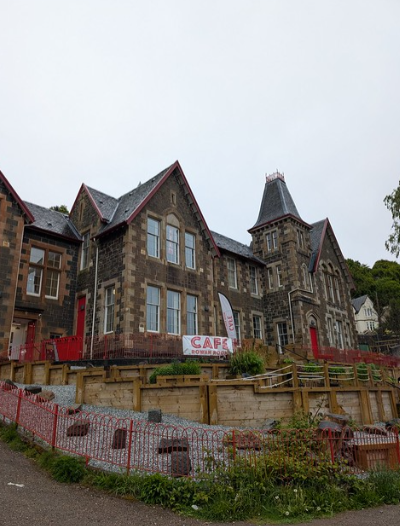
Rockfield Centre in Oban provided the venue for the joint planning session.
The purpose of the day was simple but ambitious: to bring together key rural stakeholders, share knowledge and experience, and identify ways to strengthen connections and achieve more for Scotland’s rural communities.
The day began with a roundtable discussion that quickly highlighted the wealth of knowledge and experience present in the room. Participants reflected on decades of involvement in rural development, from Community Led Local Development initiatives to previous LEADER programmes. Several attendees spoke about the importance of maintaining links with European networks, with Norway highlighted as a particularly inspiring example of community-led rural development in action.
The discussions reinforced how much Scotland continues to learn from the experiences of neighbouring countries and wider European approaches to Local Action Groups and rural governance.
Scottish Government officials also provided an update on current rural policy developments, underlining the importance of community-led approaches in delivering meaningful outcomes for rural areas. Attention was given to emerging priorities, Youth LAG activity, and the tools being developed to better understand and respond to the evolving needs of Scotland’s rural communities.
Participants then moved into facilitated table discussions centred around three key questions. Ideas, observations and recommendations were captured on post-it notes and gathered for further analysis by Scottish Rural Action.
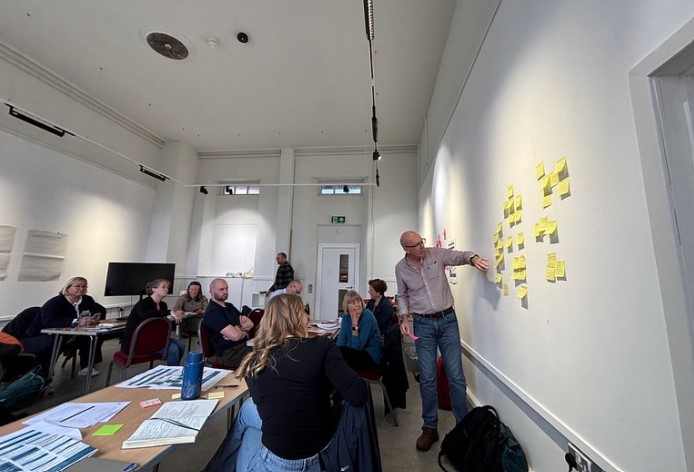
Following lunch, Artemis from Scottish Rural Action led the afternoon session, encouraging participants to explore the themes and ideas that had emerged during the morning discussions.
Working in groups, attendees identified potential practical actions and opportunities for improvement. The sessions generated a wide range of feedback, with several recurring themes emerging.
Planning for the next five years
Participants highlighted the importance of maintaining conversations around change and ensuring that any future strategic direction for CLLD reflects the realities facing rural communities. Testing new approaches and adapting to changing circumstances will be vital over the coming years.
Understanding the wider funding landscape
There was strong agreement on the need to better map and understand available funding streams. Communities often face a complex funding environment, and clearer information could help local groups navigate opportunities across local government, CLLD programmes and wider rural support organisations.
Making better use of existing networks
Attendees recognised that Scotland already benefits from a range of established rural platforms and networks, including the Scottish Rural Network, Scottish Rural Action and the Rural Stakeholder Group (RSG). However, there was a shared view that these opportunities could be utilised more effectively and promoted more widely. Emerging initiatives such as CLLD NET were also highlighted as positive developments.
Strengthening communications
The importance of showcasing successful projects and sharing learning through case studies was repeatedly emphasised. The Scottish Rural Network already plays a key role in highlighting examples from across rural Scotland, but participants felt there was scope to increase both the volume and diversity of stories being shared.
Ensuring strong community representation
Another important discussion focused on representation. Participants stressed the importance of ensuring that representatives accurately reflect the communities they serve, helping to bring clear and authentic local perspectives into national discussions and decision-making forums.
Addressing consultation fatigue
A recurring concern was the issue of consultation fatigue. Communities are often asked for their views, but participants noted the importance of ensuring that consultation activity leads to visible action and tangible outcomes
One of the afternoon groups explored the relationships and interconnections between CLLD, SRA and SRN. Their discussions highlighted the significant overlap between the networks, events and opportunities offered by each organisation.
The conclusion was clear: there is considerable potential for greater collaboration and stronger partnerships across Scotland’s rural development landscape.
As one participant reflected, a key question throughout the day was:
“Do we want to work together?”
The consensus from the room was an emphatic yes. Participants recognised that continued collaboration will be essential if the progress achieved through community-led development over recent years is to be sustained and built upon.
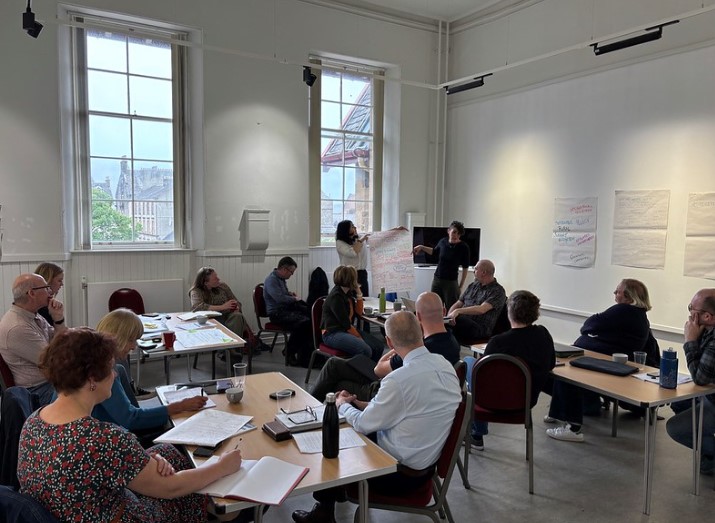
In the closing remarks, Vanessa, Scott and David reflected on the day’s discussions and the importance of maintaining strong connections between CLLD networks, Scottish Rural Action, the Scottish Rural Network and the Rural Stakeholder Group.
Participants again looked beyond Scotland for inspiration. Finland, Norway and other European examples were highlighted as valuable sources of learning, with particular emphasis placed on maintaining engagement with European rural development initiatives and networks. The Rural Pact was also referenced as an example of the collaborative approaches taking shape across Europe.
The day concluded with a strong sense of optimism and a shared commitment to working together to support rural communities across Scotland.
A final highlight of the trip for the Scottish Government Rural Communities and SRN team was a visit to LORI (Lorn and Oban Reuse Initiative), located just outside Oban. The visit provided another inspiring example of community-focused activity and reinforced many of the themes discussed throughout the day.
If you’re visiting Oban, it is well worth a visit.
The planning session demonstrated the strength of Scotland’s rural development network and the value of bringing together people, organisations and communities with a shared purpose. While challenges remain, the discussions in Oban showed a clear willingness to collaborate, learn from others, and continue building a strong future for rural Scotland.
There are many other organisations who may be offering funding that will help you, and our handy funding search tool brings them all together.