Find more funding
There are many other organisations who may be offering funding that will help you, and our handy funding search tool brings them all together.

A new road safety campaign advising drivers to look out for red deer on Highland roads has been launched, running until the end of November.
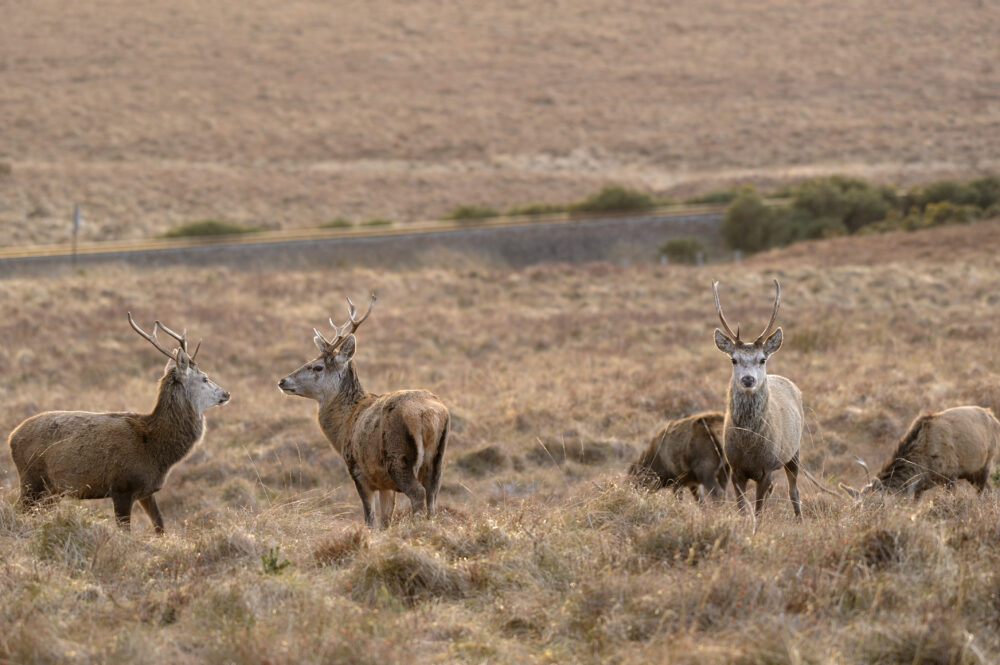
Deer-vehicle collisions typically increase at this time of year with shorter days and as red deer move down to lower ground to find food and shelter. Red deer stags in particular may be tempted to richer feeding grounds to recover following their rutting activity.
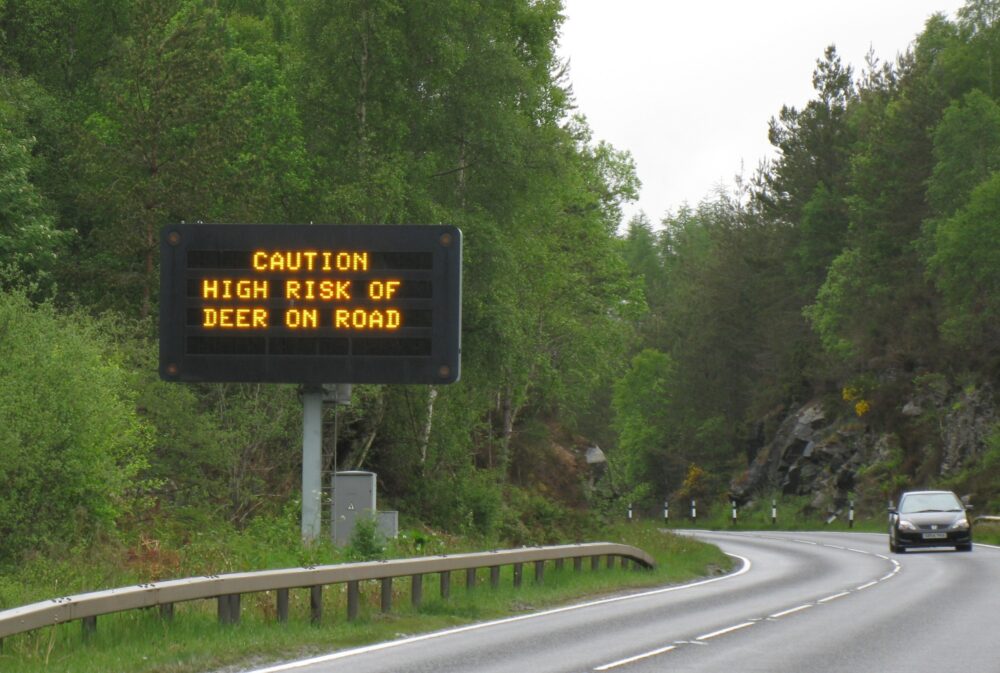
NatureScot is working with Transport Scotland and Traffic Scotland to put alerts on fixed electronic variable message signs (VMS) at dawn and dusk, reminding drivers of the risk of deer on the road.
Messaging will be in place along trunk roads in the main red deer range in the Highlands, as well as in Grampian and Argyll, until the end of November. This includes the A9, A99, A835, A87, A82, A83, A85 and A96.
This year, a particular focus will be at Lochend on the A82 at Loch Ness after reports of an increase in collisions between red deer and vehicles. Mobile variable message signs will be in place here throughout November, cautioning drivers to slow down and be alert for deer.
Speed monitoring will also be in place for a week before and after use of the signs at Lochend, to gauge whether the signage is having an impact on vehicle speeds.
Dominic Sargent, NatureScot Deer Policy Officer, said:
“Public safety is a key part of our wider work with partners to reduce deer impacts across Scotland, particularly in the areas where we know those impacts are highest.
“These warning messages are an important reminder to drivers to be ‘deer aware’, particularly at peak collision times around dawn and dusk, when deer are more likely to venture on to grass verges near roadsides as they browse and feed.
“Simply slowing down and being alert to the possibility of deer can really help to reduce the likelihood of collisions.”
Angus Corby, Transport Scotland Landscape and Biodiversity Manager, added:
“We continue to work closely with colleagues in NatureScot and our contractors to assess the extent and impact of deer-vehicle collisions across Scotland’s trunk roads, and to determine where mitigation is most needed.
“This work is a vital part of the overall management of the network for the reliability of these strategic transport routes and the safety of those using them. It is also important for the welfare of the wild deer which are an intrinsic part of the landscape.
Tips for reducing the risk of a deer-vehicle collision:
There are many other organisations who may be offering funding that will help you, and our handy funding search tool brings them all together.