Find more funding
There are many other organisations who may be offering funding that will help you, and our handy funding search tool brings them all together.

Two new reports highlight the remarkable recovery of Loch Carron’s flame shell beds, strengthening Scotland’s marine biodiversity.
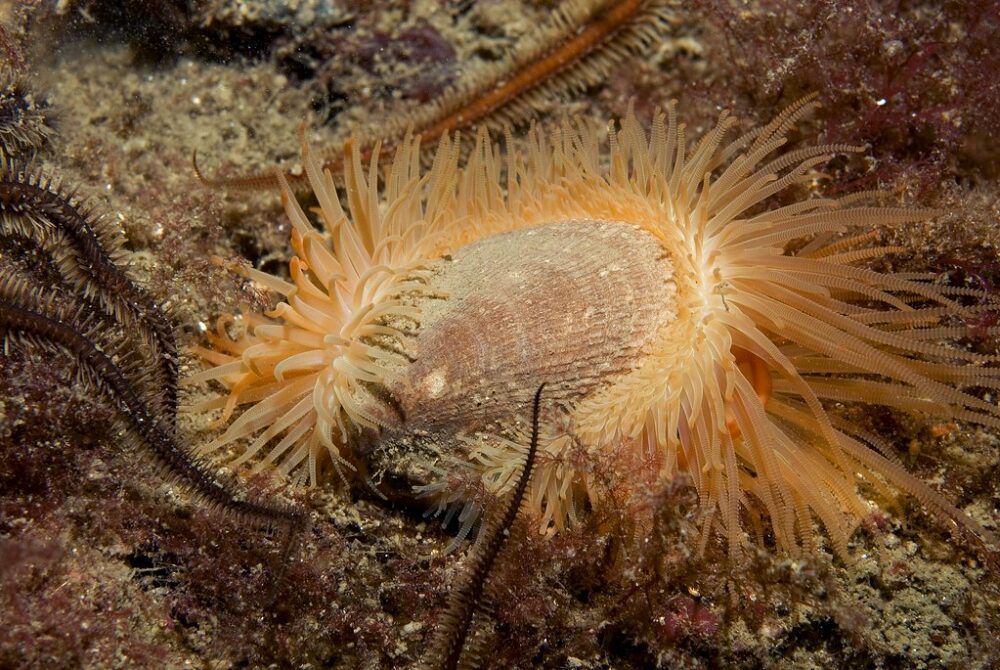
The first report, by Heriot-Watt University researchers, re-assessed the condition of flame shell beds at three monitoring stations in outer Loch Carron which were originally surveyed in 2017. At that point, scallop dredge tracks were clearly visible, with flame shell nests disrupted, fragmented and flattened.
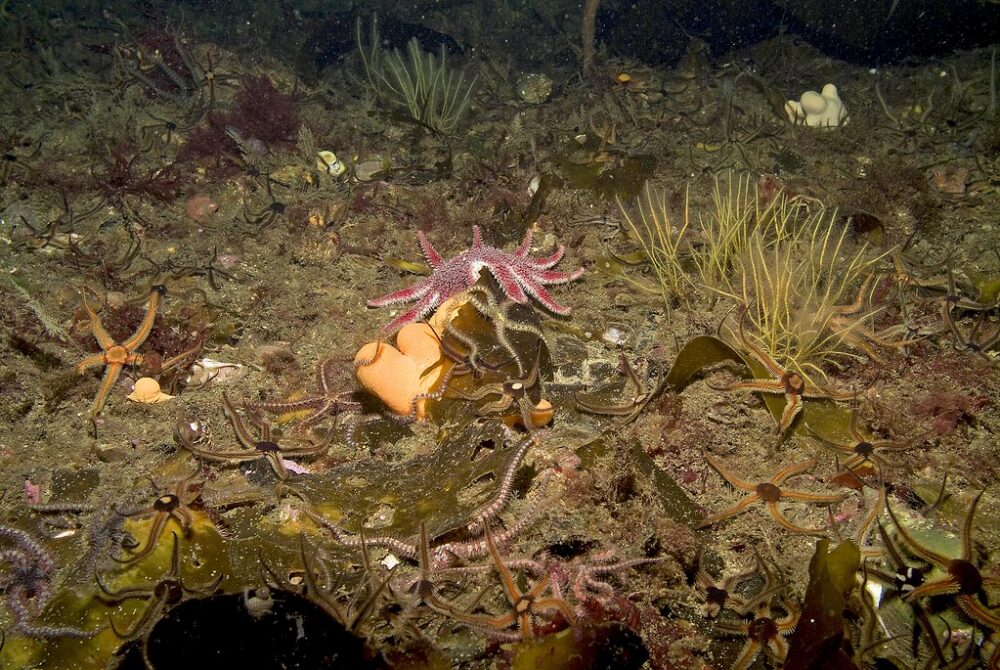
When the site was surveyed by the team again four years later, the markers and the damage were no longer visible at any of the three monitoring stations, with the areas now comprising well-defined nests – a sign of healthy flame shell beds.
Further results, from a more recent NatureScot video survey across the wider area, suggest that the flame shell bed has also expanded.
Flame shells, which are bivalve molluscs, live hidden on the seabed in nests they build from shells, stones and other materials, bound together to form dense beds. These beds support hundreds of other species and help to stabilise the seabed. Flame shell beds are found mainly on the west coast of Scotland, with the largest known flame shell bed in Loch Carron. They are also protected in five other MPAs around Scotland’s coasts.
Rie Pors, NatureScot Marine Habitats Ecologist & Surveyor, said:
“It’s wonderful news that an important habitat like this, which is home to so many marine animals and plants, can recover relatively quickly from damage. It shows the big difference a Marine Protected Area can make for the animals and habitats in our seas.
“It’s important to note that while the bed in Loch Carron appears to have recovered fully, recovery may take longer in other locations, depending on the health of the bed before damage and on the extent and intensity of the damage. Fortunately, in Loch Carron, dredging didn’t cause a mass removal of nest material, as it was the result of a single dredging incident over an otherwise healthy bed. It left a trail of broken and separated nest material on the seabed from which the flame shell beds appear to have recovered.
“Loch Carron is a real success story, showing what quick and decisive conservation action can achieve.”
For more information, see:
Overview – Loch Carron MPA – Conservation and Management Advice
Research report – Assessment of recovery from dredge impacts in Loch Carron
Research report – Biological analyses of underwater video from monitoring and research cruises
Main Image: An exposed flame shell on a dense bed in Loch Carron – credit Graham Saunders-NatureScot
There are many other organisations who may be offering funding that will help you, and our handy funding search tool brings them all together.