Find more funding
There are many other organisations who may be offering funding that will help you, and our handy funding search tool brings them all together.

Professor Murray Pittock becomes Ambassador for Ellisland as millions prepared to sing world's most famous song.
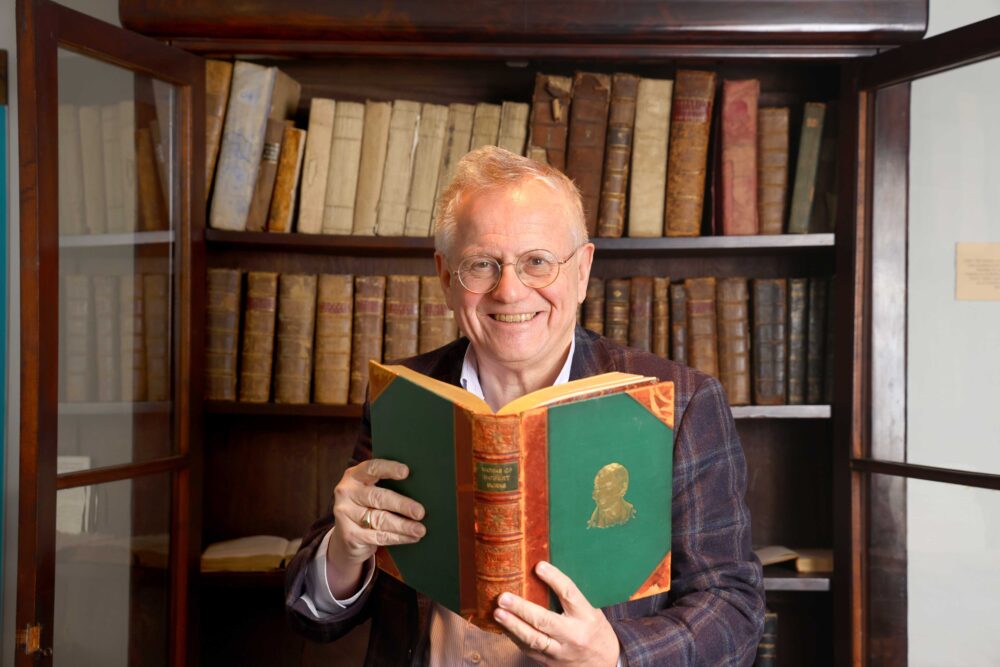
Professor Murray Pittock, of the University of Glasgow, has become an Ambassador for Ellisland and the “Saving the Home of Auld Lang Syne” campaign. He is a prominent cultural commentator and academic leader, and the author of the groundbreaking “Robert Burns in the Scottish Economy” report. He brings deep expertise on Burns’s cultural and economic significance to the campaign to restore Ellisland.
The announcement came just after millions of people across the globe marked Hogmanay celebrations, when Auld Lang Syne was sung from Tokyo to Times Square, continuing a tradition that began in a Dumfriesshire farmhouse 237 years ago.
Robert Burns wrote more than a quarter of his life’s work at Ellisland Farm, including Auld Lang Syne. It was the only home he designed and built, set in a landscape shaped by Burns’s own hand. For many decades Ellisland was cared for by dedicated volunteers who created a museum with a significant collection, but time, weather, and financial pressures have taken their toll and a campaign was launched last month to raise funds to save it.
Professor Pittock’s groundbreaking 2019 research – welcomed by both the Scottish and UK governments, and an important component of the University of Glasgow’s 2023 Queen’s Anniversary Prize – revealed that Robert Burns contributes over £200 million annually to Scotland’s economy through tourism, festivals, food and drink, and retail, with his enduring brand value to the country assessed at almost an additional £140 million annually.
The study demonstrated that Burns represents one of Scotland’s most powerful cultural and economic assets, yet one that requires better infrastructure and promotion to reach its full potential. Crucially, the report specifically recognised a particular opportunity for Burns sites in Dumfries and Galloway.
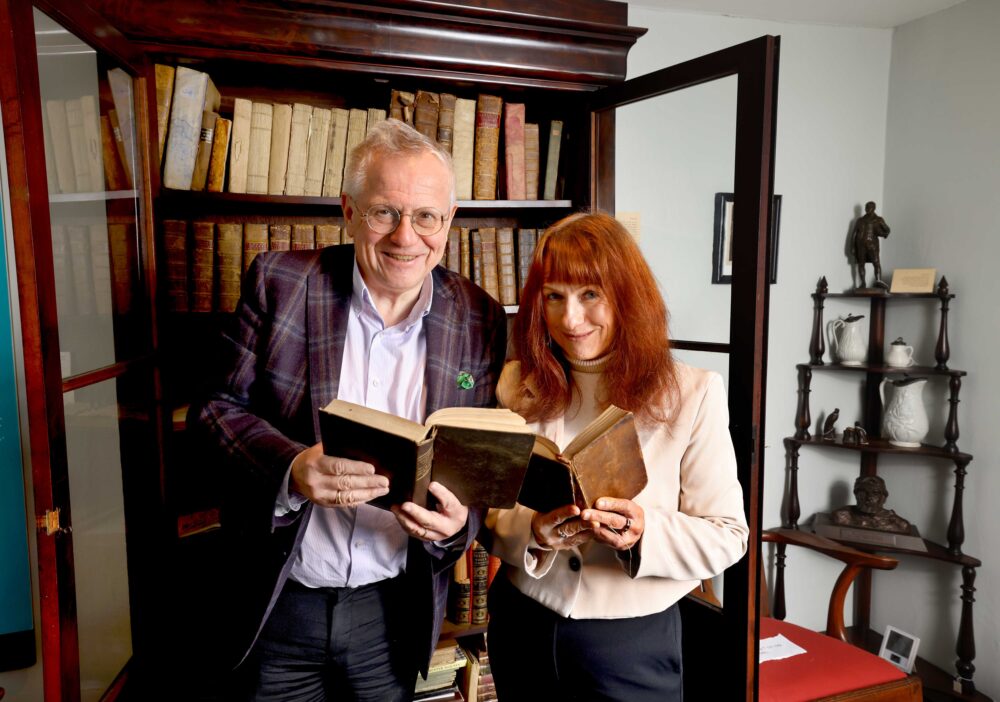
Professor Murray Pittock said:
“Ellisland represents an extraordinary opportunity. This is where Burns was at the creative peak that gave us Auld Lang Syne, one of Scotland’s greatest cultural exports. Yet the buildings face serious deterioration and the site lacks the infrastructure needed to properly serve visitors or protect its collection.
“My research showed that investment in Burns heritage delivers substantial economic returns alongside cultural benefits. For comparison, Mozart’s value to Austria was estimated at €5 billion over 20 years ago, and is far higher now. Saving Ellisland isn’t just about preserving the past; it’s about creating a sustainable asset that can drive tourism, support local communities, and showcase Scottish culture to the world.”
The appointment represents a full-circle moment, as it was Joan McAlpine who, as MSP for South Scotland, initiated the January 2018 parliamentary debate that led to Professor Pittock’s research being commissioned by the Scottish Government. Now, as Project Director of the Robert Burns Ellisland Trust, McAlpine is leading the kind of infrastructure development that Pittock’s report recommended.
Reflecting on the New Year period, Joan McAlpine said:
“When millions sing Auld Lang Syne at midnight, they’re participating in a tradition that started right here at Ellisland. Professor Pittock’s research shows us the importance of making that connection visible, of ensuring people understand where the world’s most famous song was written, and why it matters.
“His recommendations for improved infrastructure in Dumfries and Galloway pointed directly to sites like Ellisland, and our goal is to create a sustainable cultural destination that delivers exactly what his research recommended. Murray’s ambassadorship means this campaign has the backing of Scotland’s leading economic analysis of Burns heritage, and it reinforces that this campaign is about Scotland’s future as much as its past.”
There are many other organisations who may be offering funding that will help you, and our handy funding search tool brings them all together.