Find more funding
There are many other organisations who may be offering funding that will help you, and our handy funding search tool brings them all together.

Findings from one of Scotland’s largest consultations on heritage is now published and shines a spotlight on voices that often go unheard in heritage conversations
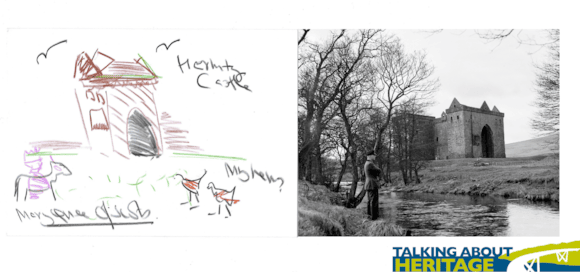
In 2025, Historic Environment Scotland (HES) launched Talking About Heritage, a national conversation about heritage. Across in-person and online workshops, surveys, and social media comments, people spoke about what they consider their heritage, how they want to see it protected, and what matters most about it to them. These results are now available to read in the Talking About Heritage engagement report.
Over 6,300 people participated in the conversation. Supported workshops were held with communities that often go unheard in discussions around Scotland’s heritage, including workshops with school pupils, Gaelic speakers (working with the Islay Gaelic Centre), refugees (working with the Scottish Refugee Council), and members of the Gypsy/Traveller community (working with MECOPP).
On Islay, participants highlighted that connections to heritage are strong but are becoming fragile over time and generations. Participants working with the Scottish Refugee Council spoke about the strong relationship between heritage and nature, which was reflected across all workshops; and members of the Gypsy/Traveller community emphasised how important physical places like the firepit were for community-making.
Many people also contributed to the consultation through a social media partnership with the Hebridean Baker, where he engaged his audience of 194,000 Instagram followers to ask how people connect with heritage through place, memory, and food. Scotland’s islands topped the list of most mentioned special places, including Shetland, Lewis, Skye, Iona, Orkney, Mull, Bute, Lunga and more.
Overall, those who participated in Talking About Heritage held a broad and inclusive understanding of heritage. 88% said that it’s the experience of being there that matters to them most about heritage. People felt most connected to heritage while travelling between places (59%), spending time with family and friends (57%) and when on holiday (46%). Cultural traditions and practices (also called intangible cultural heritage) featured in many conversations, and so did the importance of the heritage of marginalised communities, and telling the story of Scotland’s heritage to reflect different perspectives and sometimes conflicting narratives. 70% of survey respondents wished to see more varied recording of heritage places, including stories, memories and cultural practices, not just buildings.
Elizabeth McCrone, Director of Heritage at HES, said:
“Scotland’s heritage is for everyone, and it is created by everyone in Scotland. Talking About Heritage has given us valuable information about what matters to people and we’ll be using that to directly shape the ways we recognise, value, and care for heritage.
“It’s amazing that over six thousand people talked to us about what heritage means to them. I’d like to thank everyone who took part in the conversation, whether that was on Instagram, in a workshop, or by filling out our survey. We want to keep building relationships with communities to ensure their voices are heard. This national conversation was only one step towards this and we’re delighted to be able to use the results to shape how we work on behalf of the people of Scotland in the future.”
The key findings from the conversation show the need to centre accessibility and the experience of heritage, prioritise climate resilience, and continue engagement with local communities. Participants also wished to see improved clarity, consistency and transparency in statutory processes and wish to be part of the documentation and recording of heritage.
Kerry Baker, Gaelic in the Community and Heritage Officer at Islay Gaelic Centre, said:
“The Talking About Heritage report highlights the important role heritage plays in connecting people to their communities, identities and shared stories. For island communities such as Islay, heritage is a living part of everyday life, shaping our sense of place and belonging. Gaelic language, culture and heritage remain vital to communities across Scotland, and this report reinforces the importance of recognising and celebrating these traditions for future generations. We are pleased to support this work and look forward to contributing to the ongoing conversation about the future of heritage.”
Daniel McMahon, Casework Volunteer Coordinator at Scottish Refugee Council, said:
“As someone who has organised trips and social events with New Scots, I know that visiting heritage sites is always a popular activity and helps people feel more connected to Scotland, beyond their local neighbourhood. Yet we often come across material and immaterial barriers that make it difficult for people to get to or engage with heritage sites.
“The team at Historic Environment Scotland facilitated the workshop for Scottish Refugee Council Volunteers at the phenomenal venue of Glasgow Cathedral. They had an approach to consultation which puts inclusivity and recognition front and centre.
“Initiatives like this are so important so that everyone, including New Scots, can reflect on the past and shape the future of Scotland.”
To read the report, visit the HES website.
Historic Environment Scotland Image Credit.
There are many other organisations who may be offering funding that will help you, and our handy funding search tool brings them all together.