Find more funding
There are many other organisations who may be offering funding that will help you, and our handy funding search tool brings them all together.

Work has begun to restore some of Scotland’s rarest mountain plants to Ben Lui Nature Reserve.
These hardy native willows are specially adapted to survive at higher altitudes and once would have been widespread as part of the habitat known as montane scrub.
But historical grazing pressure means that these low shrubs have been declining for decades and are now largely limited to the hardest to reach trees on inaccessible crags and steep burns.
Both species are considered to be vulnerable to extinction in Britain and now often exist as small, isolated populations which may not have enough diversity to reproduce and survive in the long term.
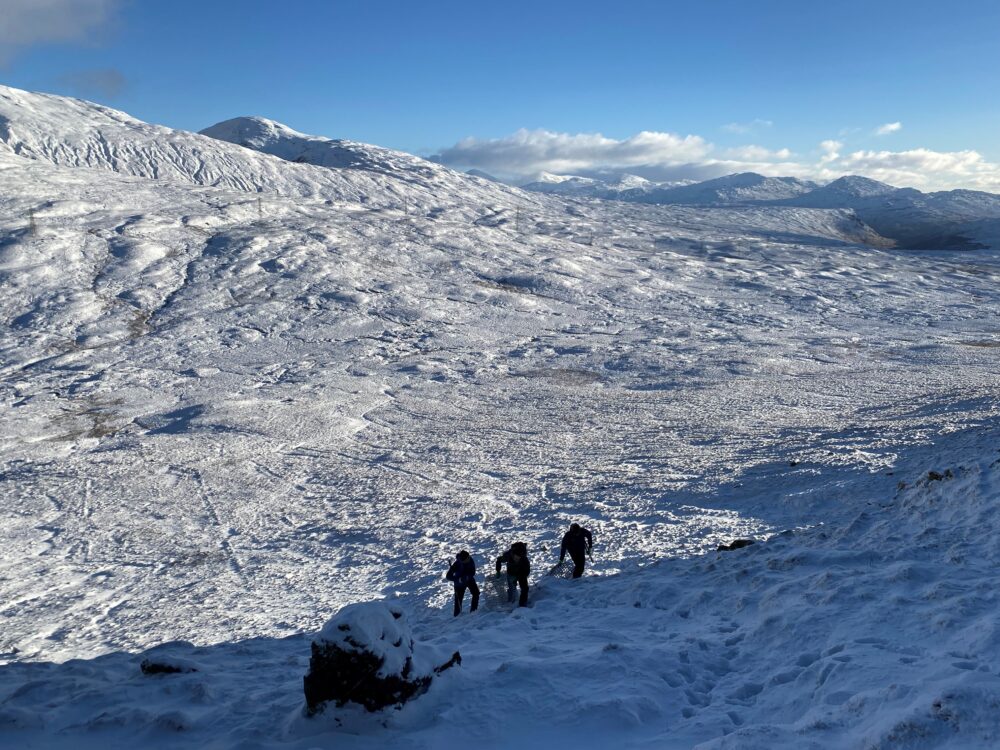
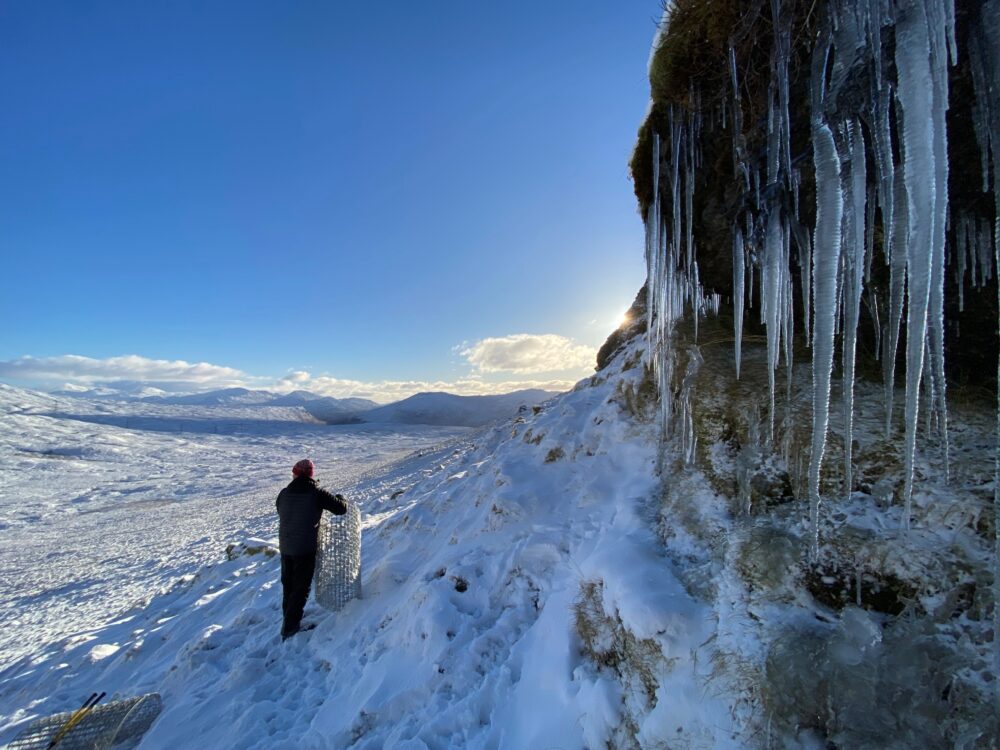
The 953-hectare Ben Lui Nature Reserve is owned by NatureScot and staff have been battling snow and ice to prepare an area of cliff and crag for planting, ready to receive the saplings in the spring.
Six species of montane willow have been recorded at the site since the 1990s. It is therefore considered to be an ideal location to trial restoration using a combination of small fenced exclosures and unprotected planting on accessible areas of crags. The aim is to lessen the risk that saplings will be browsed by grazing deer and sheep.
NatureScot Operations Officer Peter Kelly said:
“Scotland would once have had a rich habitat of montane woodland, a zone of dwarf trees and low shrubs linking forest and open hillside and supporting many species. That has now almost vanished due to historical browsing by sheep and deer.
“We’re working closely with local land managers to reduce grazing pressure in this area, but the willow scrub is still struggling. The plants rely on a very low or absent grazing pressure to thrive, and the populations are small and are not reproducing successfully.
“The aim of the project is to give these plants a helping hand at a critical time, before we lose this population altogether. Our hope is to restore a viable montane woodland habitat that can take hold and spread naturally in future.”
The planting is part of the Wild Strathfillan project which is run by the Loch Lomond & The Trossachs Countryside Trust and funded by the Scottish Government’s Nature Restoration Fund (NRF).
Ellie Mayhew, Nature Restoration Advisor for Loch Lomond and The Trossachs Countryside Trust, said:
“We are excited to be working with NatureScot to trial a novel approach to protecting rare montane willows at Ben Lui.
“If successful, these exclosures could offer a cheap and simple way to protect fragments of montane scrub habitat. We look forward to sharing the results with the conservation practitioner community.”
The Nature Reserve is part of the wider Ben Lui Site of Special Scientific Interest (SSSI), which contains four Munro peaks, with the 1,130m Ben Lui often regarded as among the finest mountains in the southern Highlands. Together with Ben Oss, Beinn Dubhchraig and Beinn a’ Chleibh, the area is renowned for its exceptionally rich and varied upland flora.
The project involves small, discrete areas of planting which aim to compliment and reinforce existing populations of montane willows in this area. The exclosures are located in a remote area at the base of crags on the north-east of Meall nan Tighearn at a height of between 500-650m, so will have no visual or access impact on walkers accessing the popular Munro summits.
Main image Credit: Carrying materials for the exclosures uphill to the planting site ©Natalie Ward NatureScot
There are many other organisations who may be offering funding that will help you, and our handy funding search tool brings them all together.