Find more funding
There are many other organisations who may be offering funding that will help you, and our handy funding search tool brings them all together.

A report from The James Hutton Institute outlines a strategy for using environmental DNA (eDNA) to improve biodiversity monitoring in Scotland, supporting better environmental management, policy decisions and long-term conservation efforts.
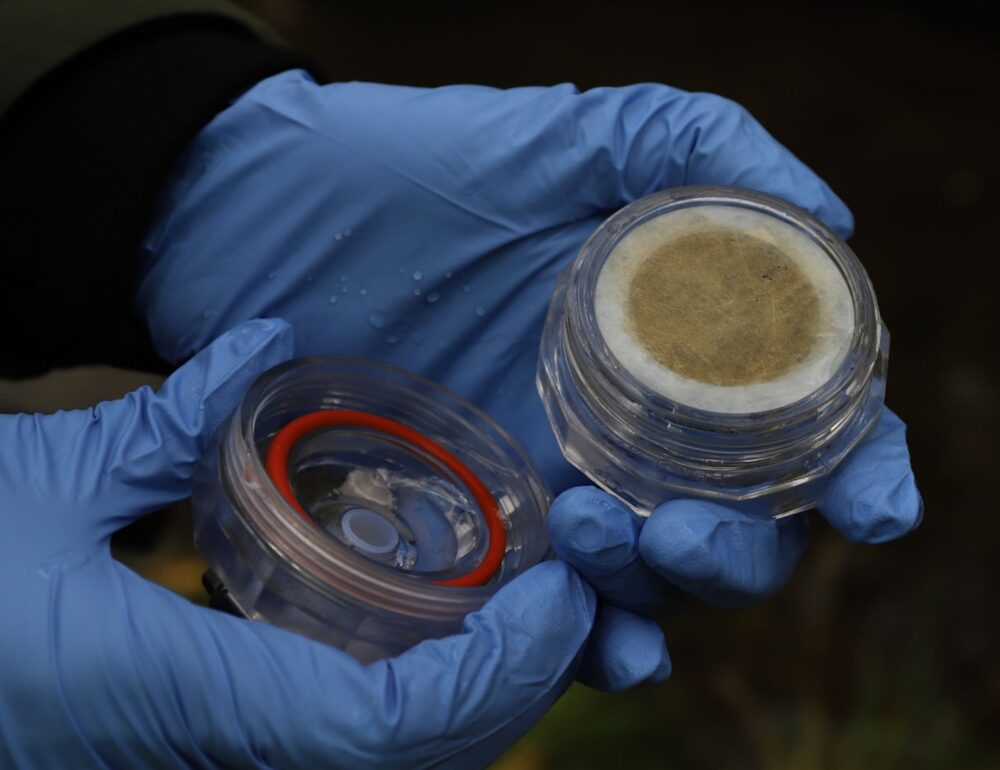
eDNA refers to genetic material organisms leave behind in soil, water or air. By analysing this material, scientists can assess biodiversity and environmental status more efficiently and comprehensively than by traditional survey methods.
This report, which resulted from a Fellowship funded by the Scottish, Environment, Food and Agriculture Research Institutions (SEFARI), identifies significant opportunities: rapid detection of ecological change will allow more responsive and effective policy decisions as eDNA-based methods can capture data on a wide range of species simultaneously. This robust and deeper analysis helps evaluate progress in, for example, environmental restoration projects.
Dr David Cooke, Research Leader at the Hutton and co-author of the report, said:
“eDNA-based tools offer Scotland a major opportunity to modernise how we understand and manage our natural environment,
“They will be invaluable in advancing the delivery of national and international obligations, including biodiversity strategies, marine protection, river management and invasive species tracking.”
The report also highlights challenges that must be tackled, making recommendations on seven key objectives. It states that it is vital co-ordinated best practice sampling, laboratory and metadata standards are implemented and that Scotland must engage proactively or risk loss of influence and divergence from emerging UK and EU standards.
Over the longer term, the report calls for sustained investment in national infrastructure, including data systems, reference libraries and secure storage of samples and highlights the importance of embedding eDNA-based monitoring into long-term environmental reporting and emerging nature markets.
The report concludes that eDNA and related technologies represent a strategic opportunity for Scotland to lead in environmental monitoring, improving both the scale and quality of data available for decision-making.
The James Hutton Institute is a world-leading scientific organisation encompassing a distinctive range of integrated strengths in land, crop, waters, environmental and socio-economic science. It undertakes research for customers including the Scottish and UK Governments, the EU and other organisations worldwide.
There are many other organisations who may be offering funding that will help you, and our handy funding search tool brings them all together.