Find more funding
There are many other organisations who may be offering funding that will help you, and our handy funding search tool brings them all together.

Joint sea eagle tagging project launched to discover how birds interact with livestock
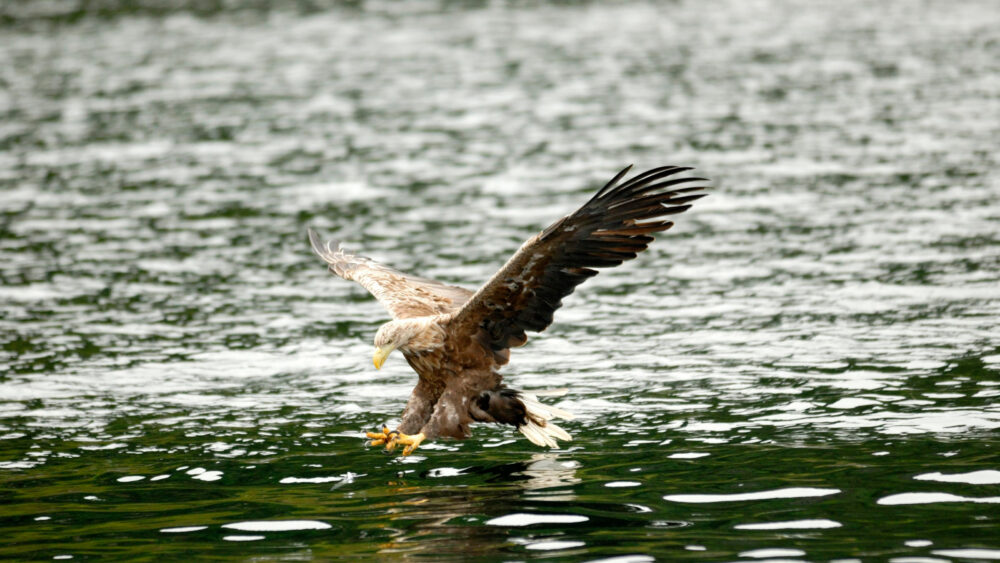
NatureScot has provided funding for the satellite tags for this collaborative research project, which brings together a broad team of experts to assess the extent of sea eagle predation of lambs and sheep. The transmitter tags are to improve understanding of the movement, behaviour of adult and juvenile sea eagles, as well as how they use and interact with the countryside.
The researchers will collate and analyse GPS (Global Positioning System) fix data received from the satellite tags to gather information on the ecology of Scotland’s sea eagle population.
Over the next two years, licenced ornithologists are fitting up to 35 satellite tags to sea eagle chicks when they are about eight weeks old. By then, the chicks are full-sized and getting ready to fledge from 10 weeks of age on. These tags –which can last for years—will give a unique insight into where the chicks travel after leaving their natal home range.
Target ranges for tagging will be within Argyll, Highlands, and the Western Isles.
The project also aims to deploy the remaining five tags on adult breeding sea eagles, which are more difficult to trap. Earlier this year, ornithologists using advice and techniques gained from European counterparts, trapped, tagged, and released an adult sea eagle on the Western Isles, boding well for success in this project. Farm managers who are comfortable hosting trapping work on their land may collaborate with this work.
The research project is a partnership between NatureScot, RSPB, Scotland’s Rural College SRUC, Natural Research Ltd, and a collective of independent ornithologists, which are sharing the costs of and resources for the project between them, with policy input from the NFU Scotland and the Scottish Crofting Federation. SRUC are also tracking lambs in Argyll using GPS neck collars as part of a separate research project. This research will complement and benefit the tagging project, giving a broad picture of how sea eagles and lambs interact.
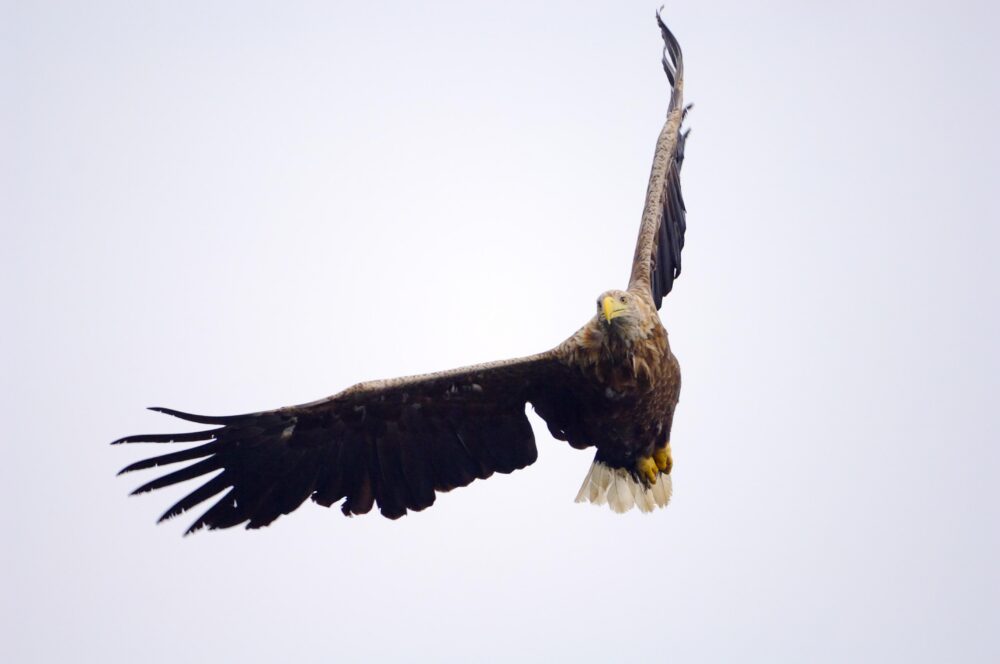
Humans persecuted sea eagles—Scotland’s largest bird of prey—to extinction by the early 20th century. Since their reintroduction initially on the Isle of Rum between 1975 and 1985, the birds—now protected by law—have successfully repopulated the west of Scotland, expanding their range in all directions and increasing impacts on upland and hill sheep flocks.
The research group will report periodically to the National Sea Eagle Stakeholder Group and NatureScot will provide further updates on its website.
NatureScot Senior Ornithologist Andrew Stevenson said,
“This project will greatly add to our understanding of how sea eagles move around and their interaction with livestock. A key gap in our knowledge is what role immature eagles play in predating livestock, given they wander widely during their first three to four years until they settle on a territory. Tagging is the best way to get a handle on what they may be doing. While this collaborative partnership began because of the need for more information about livestock predation, the tag data will also help us understand how eagles use habitat, as well as other topics such as interaction with wind farms.”
Duncan Orr-Ewing, Head of Species and Land Management RSPB-Scotland (and Research Group Chair), added,
“Gathering evidence on the behaviour and movements of sea eagles is essential to create common understanding, and to inform future conservation and land management decisions. Latest technology in the form of GPS trackers fitted to Sea eagles can help deliver such outcomes sitting also alongside other initiatives being taken forward by the National Sea Eagle Stakeholder Group. The collaborative partnership approach to this project involving NatureScot, expert researchers, farming representatives and conservationists is very welcome, and we hope to present the results in due course.”
Georgia Watson, NFUS Policy Manger – Climate, Land & Business, said,
“NFU Scotland supports this satellite tagging project as a vital step towards building a clear, shared evidence base on sea eagle behaviour. For farmers and crofters in affected areas, understanding when and where interactions with livestock occur is critical. This research must lead to practical, targeted management solutions that give farmers confidence that impacts on livestock are being properly recognised and addressed.”
Scottish Crofting Federation Chief Executive Donna Smith said,
“Crofters are reporting increased sightings and issues with sea eagles each year so this research is a very welcome development. Building a greater understanding of how the sea eagles are interacting with livestock will hopefully lead to improved targeting of management measures in the future. We therefore look forward to supporting the research in whatever way we can and to seeing the findings in due course.”
All picture credits ©Lorne Gill / NatureScot
There are many other organisations who may be offering funding that will help you, and our handy funding search tool brings them all together.