Find more funding
There are many other organisations who may be offering funding that will help you, and our handy funding search tool brings them all together.

National Park Authority is helping farmers to manage grazing pressure while supporting farming, local food production and rural economies.
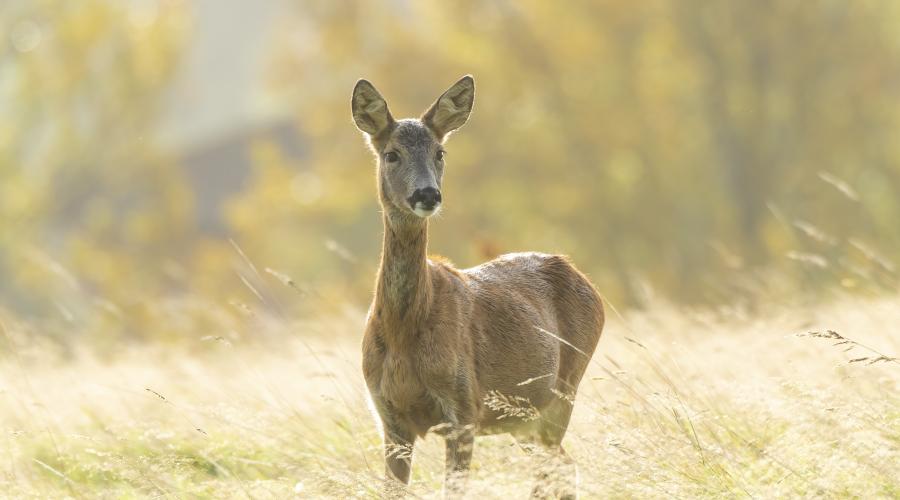
Led by Loch Lomond & The Trossachs National Park Authority, the Herbivore Management Delivery Plan for 2025–2030 is designed to help manage grazing pressure while supporting farming, local food production and rural economies.
22 of the park’s 65 designated nature sites are currently in unfavourable condition, largely due to grazing pressure from growing deer populations alongside livestock. The new plan aims to help farmers and land managers strike the right balance between grazing levels, productive agriculture and protecting important habitats.
Simon Jones, director of environment and visitor services at Loch Lomond & The Trossachs National Park Authority, said:
“Our Herbivore Management Delivery Plan strongly demonstrates that Scotland isn’t facing a choice between people and nature, or between farming and the environment.
“Strong rural communities and healthy ecosystems can only truly thrive together. This plan isn’t simply about reducing deer numbers or adopting a one-size-fits-all approach to herbivore management.”
The national park authority is also introducing practical measures designed to help land managers manage deer more effectively while creating economic opportunities for rural communities.
This support includes a Deer Management Incentive Scheme, developed with NatureScot, alongside grants for deer managers to access professional training. So far 33 deer managers are accessing training grants and 26 landholdings enrolling in the incentive scheme.
Investment is also being made in community-based deer processing and larder facilities to improve access to affordable local processing for land managers.
The park authority is also exploring the creation of a “Loch Lomond Venison” brand, aimed at strengthening the local food supply chain and creating new opportunities for farmers, game processors and rural businesses.
Scotland’s agriculture minister Jim Fairlie welcomed the initiative and said:
“Venison is a healthy and tasty meat and this is a really exciting opportunity to show how a community can benefit from responsible land management.
“This plan shows that when we prevent damage from overgrazing with good planning we can also ensure that the local food production chain, tourism and wider rural economy can benefit alongside nature.”
Deer numbers have become an increasing challenge across parts of the national park.
Shona Duncan, of Duncan Family Farms in East Loch Lomond, is hosting a newly funded community-based chiller trailer on her land and has received support through a Deer Managers Training Grant to gain a deer stalking certificate and wild meat hygiene qualification.
She said:
“Through the East Loch Lomond Land Management Forum, it became clear there was a real issue with deer management locally. Because we had a deer problem on the farm, it made sense for us to support having one here.”
“Last year, we set aside land for an Agri-Environment scheme, but instead we had 70 or 80 red deer grazing it — probably the equivalent of 40 or 50 cattle.
“We’ve also had fences broken, dykes knocked down and crops damaged, which can make farming very difficult.”
The new infrastructure and training support should make it easier for land managers to deal with the problem while benefiting local communities.
The new plan has been developed with farmers, landowners, deer managers and statutory agencies including Forestry and Land Scotland, NatureScot, Scottish Forestry and the Association of Deer Management Groups.
A working group will help guide the plan, alongside a proposed land use forum bringing together representatives from deer management groups across the park.
Better grazing management will be vital for restoring native woodlands, protecting peatlands and improving habitats while maintaining productive farmland.
More balanced grazing levels could also help farmers protect crops and pasture, support forestry and tourism, and strengthen the rural economy.
The strategy sets out three key goals by 2030: stronger collaboration between agencies and land managers, improved ecological condition across the park, and land management that supports both rural communities and food production.
The initiative aims to help farmers and land managers manage deer populations more effectively while ensuring the national park remains productive, environmentally healthy and economically resilient for future generations.
(Pic by NatureScot)
There are many other organisations who may be offering funding that will help you, and our handy funding search tool brings them all together.