Find more funding
There are many other organisations who may be offering funding that will help you, and our handy funding search tool brings them all together.

A new national strategy aims to restore wildcats to a level where they are thriving and expanding in Scotland.
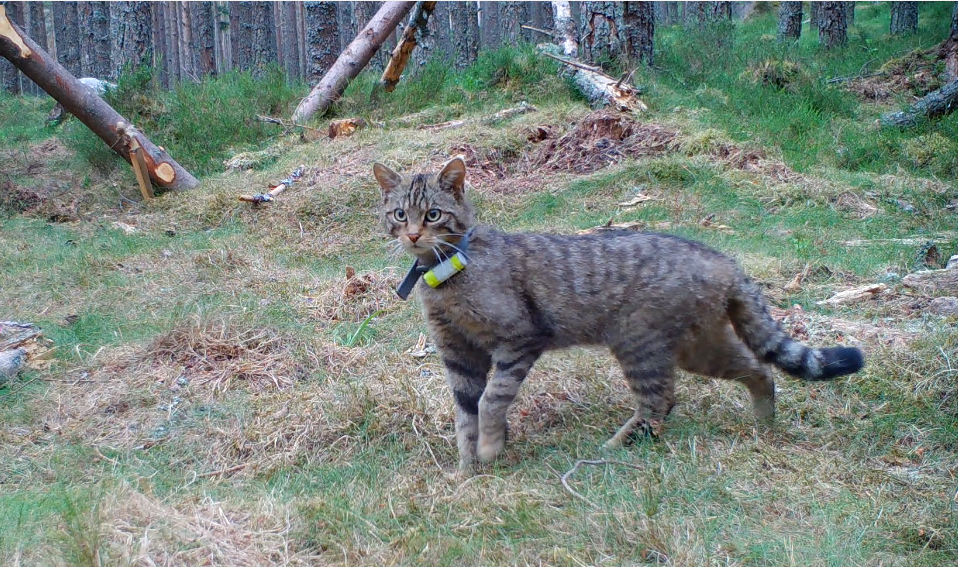
This European protected species was once found throughout mainland Britain but was persecuted for centuries and, in 2019, was declared functionally extinct.
More than 25 stakeholder organisations have been involved in developing Scotland’s Wildcat Strategy 2025-2045, working together to restore one of our most iconic but threatened species.
The strategy was launched today (22 September) at the Eurowildcat Conference at the Highland Wildlife Park in Kingussie, home to the Saving Wildcats project. It will steer efforts to remove the biggest threats to Scotland’s critically endangered wildcats, restoring their numbers to sustainable levels by 2045.
Genetic extinction, due to hybridisation (interbreeding) with feral and domestic cats, is the main threat to Scotland’s wildcats. They are also at risk from incidental harm from predator control activities, feline disease, road collisions and habitat fragmentation and disturbance.
The strategy also sets out plans to empower and support communities to live alongside wildcats, maximising wildcats’ environmental and economic benefits, while minimising negative impacts through the broad adoption of wildcat-friendly predator control, among other measures.
Supported by an initial 10-year action plan, priorities include the need to restore and reconnect wildcat habitats to allow the expansion of their range, along with increased microchipping, neutering and vaccination of pet cats to reduce hybridisation. New conservation translocations to other areas will also need to take place after careful planning.
Building on current and previous conservation efforts, the strategy was developed collaboratively under a process designed and run by the International Union for Conservation of Nature (IUCN) Conservation Planning Specialist Group (CPSG).
An organising team, including representatives from NatureScot, Royal Zoological Society of Scotland, Cats Protection and the National Museum of Scotland helped to steer the process, and the strategy was co-produced by 25 organisations and individuals from a wide variety of sectors.
A new Scottish Wildcat Advisory Group, made up of key organisations, will now work together to help take the strategy forward.
Climate Action and Rural Affairs Secretary Gillian Martin said:
“As one of our most iconic species, once widespread across Great Britain, this strategy to conserve the wildcat is built on two decades of work that has created legal protection, deeper knowledge about wildcat biology, ecology and the threats they face. In 2023, under the Saving Wildcats partnership, the first round of wildcat releases was completed into the Cairngorms National Park, and 2024 saw the first of what has become multiple wild-born wildcat kittens taking their first tentative steps towards local population recovery.
“This new strategy builds on these early successes to begin to imagine a nationwide recovery of the species. I would like to thank all of the individuals and partner organisations for their work and dedication to get to this point and look forward to even greater success in the decade to come.”
Katharina Herrmann, IUCN CPSG facilitator of Scotland’s Wildcat Strategy, said:
“It is great to contribute to this nationwide initiative, bringing together a wide range of people, perspectives and priorities to agree on a shared path forward for the remarkable wildcat in Scotland.”
NatureScot’s Species Projects Manager, Martin Gaywood said:
“Scotland’s wildcats have been brought to the brink of extinction, but conservation efforts over the past two decades have seen our only remaining native cat returned to the wild through the Saving Wildcats partnership project, establishing new territories in the Cairngorms National Park and breeding successfully.
“This progress wouldn’t have been possible without partners and communities coming together. Now we call on this support again, to drive forward the further change we need to happen. Scotland’s Wildcat Strategy is our call to action.”
Dr Helen Senn, Head of Conservation at Royal Zoological Society of Scotland, the lead partner on the Saving Wildcats project, said:
“Saving Wildcats has taught us much about Scotland’s wildcat and the steps we must take to secure its future. A key takeaway has been learning how important it is to listen to and work alongside communities. This new strategy builds on those lessons, bringing people together with lasting and practical actions which promise the best possible future for wildcats in Scotland.”
Jeff Knott, Advocacy and Influence Director at Cats Protection, said:
“Scotland’s wildcat is an iconic native species and Cats Protection is proud to support Scotland’s Wildcat Strategy and the collaborative work being undertaken to help secure its future.
“Protecting wildcats requires action from organisations, communities and cat owners alike. Through responsible cat ownership, including neutering, vaccination and micro-chipping, we can help reduce pressures on wildcat populations while ensuring pet cats lead healthy and happy lives.
“We look forward to continuing to work alongside partners to support the long-term recovery of this remarkable species.”
Professor Andrew Kitchener, Principal Curator of Vertebrates at National Museums Scotland, said:
“Having worked on wildcats for almost 40 years and see them hurtling towards extinction until recently, it’s wonderful to see Scotland’s Wildcat Strategy laying out a clear path for future wildcat recovery.”
Scotland’s Wildcat Strategy 2025-2045
Main Image: A released female wildcat. © Saving Wildcats
There are many other organisations who may be offering funding that will help you, and our handy funding search tool brings them all together.